
Monday, December 8, 2025
123. Rubber Biscuit
The Chips (Josie 803, 1956 – b/w “Oh, My Darlin'”);
composed by Charles Johnson, Nathaniel Epps, Paul Fulton, Sammy Strain, and Shedrick Lincoln
This song is best remembered today as Dan Aykroyd’s feature with the Blues Brothers, but if Aykroyd’s relative subtlety set off Belushi, then the original version of this makes Aykroyd’s seem like a sack of doorknobs. The song is a novelty number featuring a lead scatting nonsense syllables over an uptempo harmony group who all come to a periodic halt for the same lead to deliver a series of giggling gnomic jokes about being broke and hungry. What makes it absolutely brilliant is what the Bros left out – the feather-light timing. One rap goes: “The other day I ate a ricochet biscuit. Well, it’s the kind of a biscuit that's supposed to bounce off the wall back in your mouth. If it don't bounce back – [sobs] – you go hungry!” On the Chips record, the sobs between those phrases are a weird airburst lasting a single beat. Then the ensemble comes back a whole beat sooner than you expect them to – like someone pulling your chair out from under you. Some may also remember it playing in Mean Streets when Harvey Keitel’s character is getting quickly wasted in a bar and Scorsese’s camera follows him all the way to the floor.
Note: Secular essays about individual songs, each one exactly 200 words long, appearing one per day through Advant and at least semi-regularly until Donald goes away.

Sunday, December 7, 2025
122. Cherchez La Femme
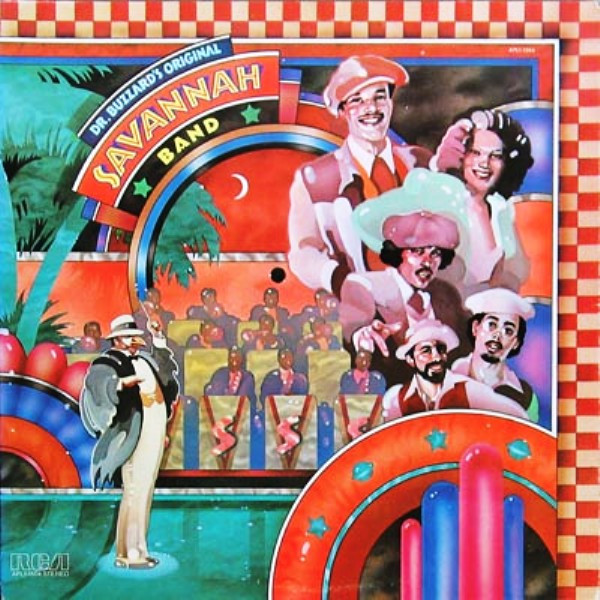
Dr. Buzzard’s Original “Savannah” Band (RCA Victor, 1976);
composed by Stony Browder Jr. & Thomas August Darnell Browder
There was no better or weirder nostalgia act than this group, because they really meant the nostalgia part – they made it intellectually challenging rather than the revolting pander it became in the mid ‘70s. On this track, their tune is just under three minutes, sandwiched between two-minute-long covers (more like lengthy quotes, but the kind you have to pay royalties for) of “Whispering,” a hit from the ‘20s, and “Se si bon,” from the late ‘40s. The latter decade is how they styled themselves rhythmically as well as sartorially, but they did nothing to conceal the electric instruments and synths – everything just fit together. And it went to number one on the Dance chart for a reason: it may not have sounded up to date rhythmically, but it felt that way, and it made the song hyperconductive – which defines Disco far more succinctly than a uniform 120 beats per minute. Neither was there anything feel-good about the lyrics – sung by the utterly brilliant Cory Daye – which are about various characters (including their manager) coping with general misery by “cherchez la femme.” As in its original sense as a French proverb, this has remarkably little to do with getting laid.
 Note: Secular essays about individual songs, each one exactly 200 words long, appearing one per day through Advant and at least semi-regularly until Donald goes away.
Saturday, December 6, 2025
121. Ихесъ (Yikhes)
Belf’s Rumanian Orchestra (Syrena Grand 11079, 1912 – b/w Сихмасъ-Тойре)
I know very little about this group or this record. No one does, and it is not just that we are a century and change apart – this record could have been top of the pops on Krypton. Yet this crackly 78 is so pop in its way, if you get it all the way in your head. They were not actually “Rumanian” – that was a term of art, as was “Bulgar” or “Odessa,” both as those cultures influenced the music over time and as euphemisms for “Jewish” – as was “Klezmer,” a centuries old term loosely translated as “musical instruments.” Yiddish speakers might get more out of the song’s title than Google Translate, which renders it in English (ha!) as “Yikes!” There were any number of very similar Yiddish-speaking dance orchestras around the western part of the pre-WWI Russian empire at the same time, but this one was fortunate enough to be recorded by an enterprising record company in Warsaw, and the records sold well enough for copies to still exist. Although emigres like Abe Schwartz and Naftule Brandwein got Klezmer going over here within a decade, this music is like what jazz might be if someone had recorded Buddy Bolden.
 Note: Secular essays about individual songs, each one exactly 200 words long, appearing one per day through Advant and at least semi-regularly until Donald goes away.

Friday, December 5, 2025
120. Take My Hand, Precious Lord
composed by Thomas A. Dorsey
This may not be the premier gospel song of the previous century, but I doubt that there is any other that connects with so much of that century. Martin Luther King Jr.’s last written words were a request that this be played “real pretty” at a (then-)upcoming service. Mahalia Jackson sang it at his funeral. Its author composed it in part as a way of dealing with the deaths of his wife and son in 1932. Dorsey had only just recently returned to religious music after being half of Tampa Red and Georgia Tom, a great blues act of the 1920s, and key accompanist for Ma Rainey. Nitpickers point out the melody’s many antecedents, but more intriguing is that it does not really have a melody. The recordings of the song I know are all different, except for its trademark cadence – the rising uplift of its first three phrases: “Precious Lord, take my hand, lead me on.” – a plea to the great unknown for divine influence. On its first commercial recording in 1937, the Heavenly Gospel Singers sang it as a shape note hymn with no melody at all. Mahalia barely departed from the tonic. Elvis Presley did nothing but.
 Note: Secular (mostly) essays about individual songs, each one exactly 200 words long, appearing one per day through Advant and at least semi-regularly until Donald goes away.
Wednesday, December 3, 2025
119. Skinny Little Bitch
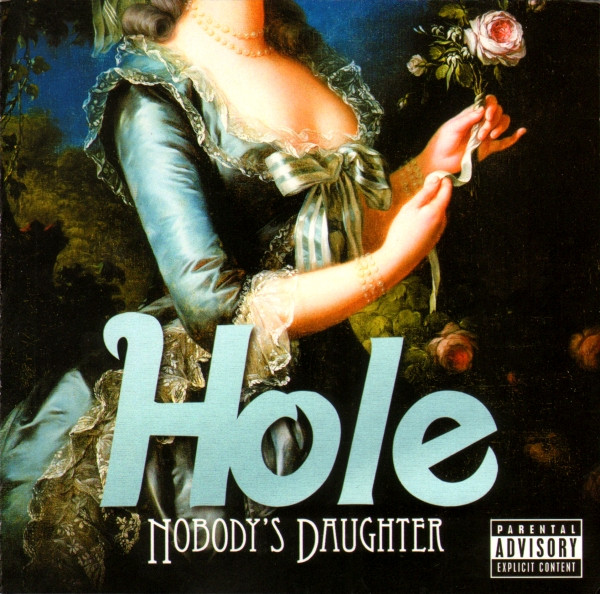
Hole: Nobody’s Daughter (Mercury/Cherry Forever, 2010);
composed by Courtney Love & Micko Larkin
Insofar as Frances Bean Cobain survived into adulthood many years ago, any reasons I might have for disliking Courtney Love from this distance are pretty much irrelevant. I am sure she is incredibly hectic to know, but yards ahead of everybody else in the room most of the time, and that correlation is the proverbial rub. She recalls Eve Babitz, without the late-breaking reactionary turn (which could still happen – she was tight with both Kanye and Russell Brand before they went over), and even if we never get any books, we do have all of those lovely nasty records of hers. This track from a later edition of Hole is her flavor of archetypal. The skinny little bitch dissolving in bad dope and dopamine could be Courtney herself, or some alternate version that burned up like magnesium long ago. Genuine cautionary tales risk seduction to render up their usable data, so she lays that ugly-tuneful rasp over ten-cylinder guitar noise and runs you over. Anyone who still thinks she leeched the life out of Kurt Cobain is never going to get it. All evidence points to her leeching it into him, and really - maybe that was what killed him.
 Note: Secular essays about individual songs, each one exactly 200 words long, appearing one per day through Advant and at least semi-regularly until Donald goes away.
118. Love Is Strange
Mickey & Sylvia (Groove 4G-0175, 1956 – b/w “I’m Going Home”);
composed by Ethel Smith
Composed by Bo Diddley (but credited to his wife at the time), his original recording of it - not released until decades later on his Chess box set – shows its subsequent recasting by these two pros as the miracle of art and commerce that it was and remains. For one thing, Bo’s version really sounds like the title – love is strange, mysterious, oppressively hermetic in its disinclination to give forth anything like clarity, and his rueful performance follows suit. In contrast, Mickey Baker and Sylvia Robinson make it sound more like a Bo Diddley record than Bo’s version does – a struck gong and a call to whatever the secular equivalent of prayer might be. Mickey’s adamantine guitar figures over the tremelo rhythm are even more flagrant come-ons (and come-here’s) than the cooing vocal duet, notwithstanding the colloquy that caps the duet at the end: “Sylvia?” “Yes, Mickey?” “How do you call your lover boy?” Mickey continued to play killer guitar for all kinds of acts over here, until he moved to France in 1962 and played killer guitar there. Sylvia went solo, palled around with gangsters, and brought us the Sugar Hill Gang and Grandmaster Flash. Fucked them over, too.
 Note: Secular essays about individual songs, each one exactly 200 words long, appearing one per day through Advant and at least semi-regularly until Donald goes away.
Tuesday, December 2, 2025
117. The Best Day
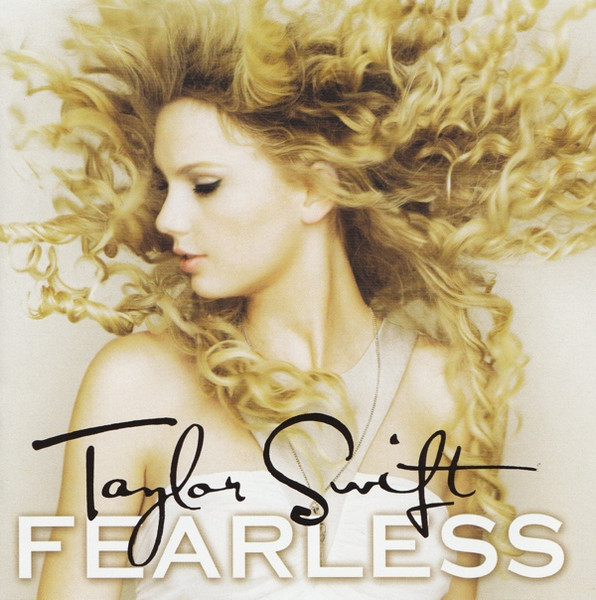
Taylor Swift: Fearless (Big Machine, 2008);
composed by Taylor Swift
Even if I disliked Taylor Swift, I do not argue with forces of nature, and to paraphrase what Mr. Spock once said about a killer robot, “I do not believe there is much beyond Taylor Swift's capabilities,” which is as much threat as admiration. Taylor Swift is a giant in every sense that counts. Not only does she do impossible things, she does things that are impossible because they really ought to be impossible – like writing this utterly sincere and dulcet love song to her mom. The first version came out when she was eighteen. She remade it along with the rest of her then-Scooter-Braun-controlled catalogue when she was thirty-one. It sounds the same as the first – slightly more alto, but not a hair less genuine. The video has a different but equally idyllic selection of childhood videos as the original video had. Many of us develop a sense of irony because we resent the way forces of commerce and public authority generalize and exploit emotions. The irony of Taylor Swift is that she has become the hugest pop star of the moment by doing the opposite. Tunefully, too. My sole complaint is that her albums run a little long.
 Note: Secular essays about individual songs, each one exactly 200 words long, appearing one per day through Advant and at least semi-regularly until Donald goes away.
Subscribe to:
Posts (Atom)