Wednesday, December 17, 2025
132. You And Me
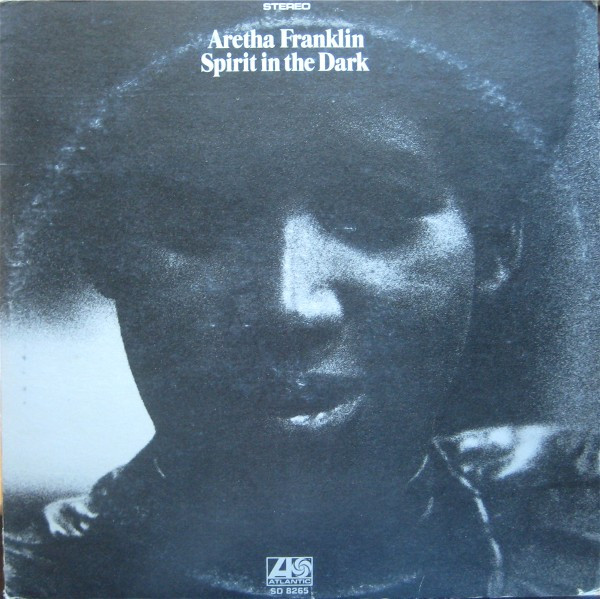
Aretha Franklin: Spirit In The Dark (Atlantic, 1970);
composed by Aretha Franklin
One great thing about Aretha Franklin as a phenomenon is that you cannot praise her fulsomely without leaving out something key. An absolutely nonpareil singer, most obviously, but a terrific pianist as well – she plays on all of the greatest Atlantic sessions, cuing up everything that the best musicians in the country at the time did on her records. But then you miss what a great songwriter she also was. She had bigger self-written tunes than this track and bigger (if not necessarily better) albums than this great one, but so much about both was just so right in so many singular ways. The backup musicians on half this album were the Muscle Shoals crew, but the other half were the Dixie Flyers, the house band at Criteria Studios in Miami, who had not backed her up on record before and play on this track. Everything is keyed to her piano, which has an intimacy very much like having a lover wake you up just by breathing, aptly setting a lyric conveying a similar affect: “We've got our strength and our love for all mankind / But most of all, we've got peace of mind.” Did she, really? Maybe. Here, indubitably.
Note: Secular essays about individual songs, each one exactly 200 words long, appearing one per day through Advant and at least semi-regularly until Donald goes away.

Tuesday, December 16, 2025
131. Ace of Spades
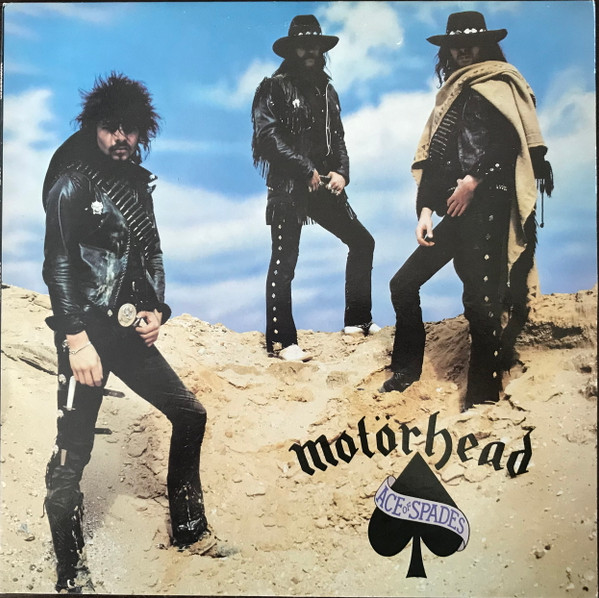
Motörhead: Ace of Spades (Bronze, 1980);
composed by Ian Fraser Kilmister, Edward Allan Clarke, and Philip John Taylor
From the time that super high-definition guitar noise became feasible and readily monetizable in the late 1960s, and insofar as that sound was tethered to pop music forms – i.e. songs with sung words – one of the most formidable formal issues has been what sort of words are a natural fit with that unnatural, technologically fabricated sound. Do you proceed as if the unnaturalness was not there by puffing up the grandeur of the meat robots doing the playing, or do you address the technological displacement directly even if you look a little abject? One of my pet theories is that the former is a capsule definition of heavy metal, while the latter does likewise for punk. And one of the many charms of Motörhead was how Lemmy Kilmister’s long-running concoction flipped two fingers at the distinction and confused everybody too thick to get his point. Motörhead were plenty loud and plenty fast, but Lemmy projected a very singular personality as a bellowing frontman – hectic to know, but funny as hell in an oddly introspective kind of way, as in this diffident praise of poker: “The pleasure is to play, Makes no difference what you say, I don't share your greed.”
 Note: Secular essays about individual songs, each one exactly 200 words long, appearing one per day through Advant and at least semi-regularly until Donald goes away.
Monday, December 15, 2025
130. Chinatown (Main Title)
Chinatown - Original Motion Picture Soundtrack (ABC, 1974);
composed by Jerry Goldsmith
I have never gotten with the phrase “Love Theme from” although that is the official designation of the music that plays under (or with) the opening credits of this great rewired noir written by Robert Towne and directed into perdition by Roman Polanski. But here the designation is more than fair – love is fucked up. And sometimes a film’s makers reject one score and hire you to compose an entirely different one in ten days, and somehow under deadline you come up with a theme that acts like a full recursion of the film’s emotional mayhem – the deepest longing handcuffed to an unconsolable abyssal plunge. The music starts in one bright key with a strum of muted harp strings and wispy upward phrases, and seconds later drops precipitously into a theme on solo trumpet with piano counterpoint played in a completely different key like a trap door opening under you. I do not know of any other movie theme that touches it – maybe one or another of Nino Rota’s – and it is so wedded to its context that covering it is out of the question – unless you are John Zorn and precede your version with three minutes of thrash punk.
 Note: Secular essays about individual songs, each one exactly 200 words long, appearing one per day through Advant and at least semi-regularly until Donald goes away.
Sunday, December 14, 2025
129. Attention Na SIDA
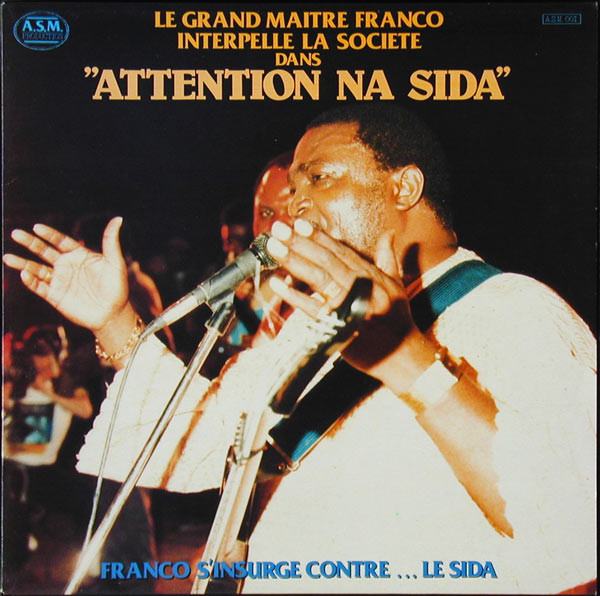
Le Grand Maître Franco & Orchestre Tout Puissant O.K. Jazz: Attention Na SIDA (African Sun Music, 1987);
composed by François Luambo Makiadi Lokanga La Djo Péné
From the perspective of the western audience for African pop music (Hi, there!), Franco is crudely perceived as being to Zaïre (he did not live to see the name of his country return to “Congo”) what Fela Kuti was to Nigeria. They were both giants by any standard, of course. Franco, a great singer, guitarist, and bandleader, was a prime co-inventor of a transmogrified rumba called soukous, in which multiple interlocking guitar parts spin out over a Cuban-tinged pulse that tended to start a number serenely and then, at an agreed nexus, shift into an intense irresistibly danceable boil. The other unfortunate commonality with Fela is that AIDS took them both away, although Fela – contrarian that he was – denied it all the way to his death in 1997. In contrast, Franco released this public service message about the menace – in French rather than the Lingala he usually sang in – even before his own diagnosis. Uncharacteristically, there is no quieter opening section to this tune – it starts at boil and continues at full intensity for sixteen minutes (on record – live it could have gone on far longer). Apart from the words, it sounds mostly like the greatest party ever. Probably was.
 Note: Secular essays about individual songs, each one exactly 200 words long, appearing one per day through Advant and at least semi-regularly until Donald goes away.
Saturday, December 13, 2025
128. Dogs
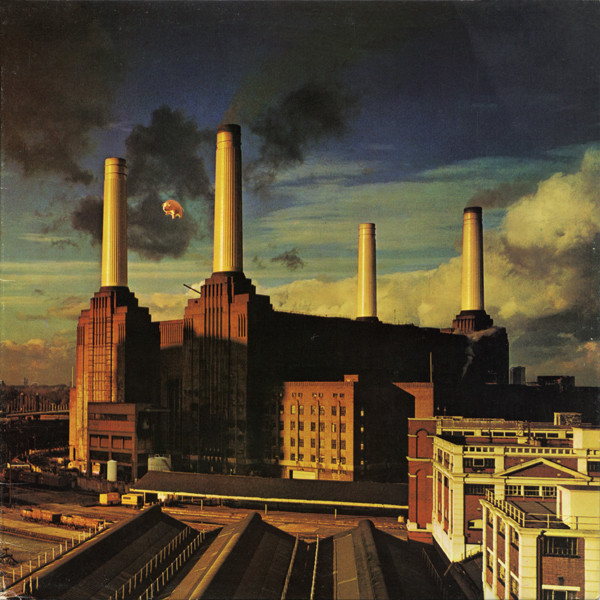
Pink Floyd: Animals (Columbia, 1977);
composed by Roger Waters & David Gilmour
The greatest compliment I can pay to the vaunted “concepts” at work in Pink Floyd’s skadillion selling ‘70s albums is that you can ignore them altogether and at the same time they made the music what it was just by lending a kind of internal armature for what was basically an amorphous but still remarkably distinctive sound concept. The songwriting was neither here nor there after Syd Barrett checked out – and his tunes were pretty amorphous too, but they were concisely so. So although Roger Waters’s imprecations against rat-racing capitalist running dogs are no more acute than those in “Pleasant Valley Sunday,” contextualizing them resulted in this hilariously spooky haunted house music with cool guitar parts that holds up remarkably well for seventeen minutes solid. This track was fashioned from what was basically a leftover from the sessions for Wish You Were Here, which works better as a discrete unit than Animals does, in part because after months of flailing at a follow up to Dark Side of the Moon, they stumbled into a working method that worked even better. They got one more good album out of it, tailored to a collective aural identity, before Waters’s concepting swamped it.
 Note: Secular essays about individual songs, each one exactly 200 words long, appearing one per day through Advant and at least semi-regularly until Donald goes away.
Friday, December 12, 2025
127. Triad
The Byrds: The Notorious Byrd Brothers - unreleased (Columbia, 1968);
composed by David Crosby
For better or worse, there was probably nobody who believed in hippiedom more than David Crosby. He also exemplified how it differed from other forms of alternative culture before and since - some of the more visionary genuinely thought they were closer to some kind of future normal than the straight world in its fatal contradictions could possibly remain. Except that fatal contradictions are, in Brecht’s terminology, how mankind stays alive, if you can call it that. This track was recorded for the Byrds’ last great album just before they kicked him out for being an arrogant asshole (ultimately, he agreed with that assessment) and it would have added an even spacier dynamic to the cross-faded spacy masterpiece that Roger McGuinn fashioned out of what was left when they dropped this song (and Crosby gave it to Jefferson Airplane). Ostensibly, the song is about a threesome. More to the point, the song is also about what it might be like if no one was afraid of what they wanted most – not excluding “water brothers,” a now-quaintly archaic term for gay men, and not at all a common or publicly expressed sympathy, even then. An arrogant asshole who truly meant well.
 Note: Secular essays about individual songs, each one exactly 200 words long, appearing one per day through Advant and at least semi-regularly until Donald goes away.
Thursday, December 11, 2025
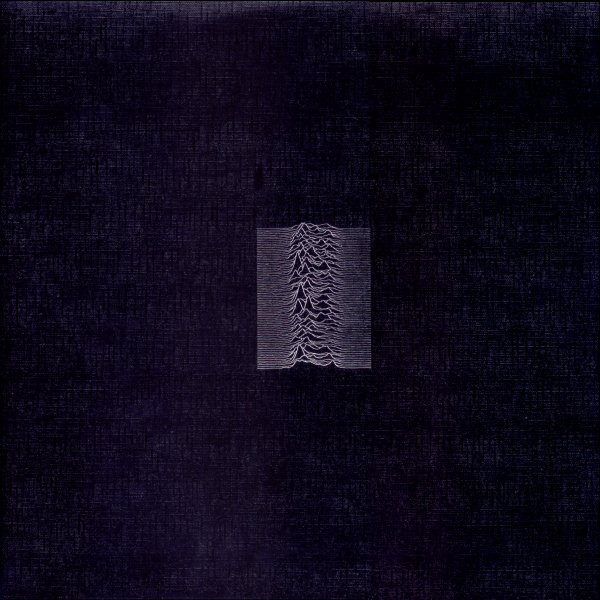
126. Shadowplay
Joy Division: Unknown Pleasures (Factory, 1979);
composed by Ian Curtis, Peter Hook, Stephen Morris, and Bernard Sumner
I rarely speculate on what might have happened if any artist who dies or otherwise absents themselves had not done so – and Ian Curtis might as well be the face on that particular milk carton. Insofar as his collaborators had more than enough juice to reconfigure themselves as New Order, a very different band with a comparable albeit rather more cheerful legacy, Curtis was lucky. But they all were. Each of their two albums signifies in a different and equally plangent way. Depression was Curtis’s great (or primary) subject, but on Closer (too appropriate a title), it defined the parameters and the often almost static spaciness of the music, while Curtis’s disinclination to sing on key ever again squared the circle. On the debut Unknown Pleasures, however, music and topic collided at steeper angles. This track might be the most rocked-out thing they ever recorded, but in a way unique to them and their weird-ass producer Martin Hannett: tension, dynamic shifts, and dead space delineated by bass and skeletal drums, setting up infusions of almost orchestral guitar noise alternating with a creepy single-note figure answering Curtis’s grim ruminations. Can depression actually sound cheerful? No, but it sure can be precise.
 Note: Secular essays about individual songs, each one exactly 200 words long, appearing one per day through Advant and at least semi-regularly until Donald goes away.
Subscribe to:
Posts (Atom)